Wearable technologies, known as “wearables,” designed to continuously measure various vital parameters or biomarkers, are currently emerging as groundbreaking innovations in sports medicine and healthcare. From fitness trackers to sweat sensors, these devices are pushing the boundaries of non-invasive health monitoring.
Within just a few years, wearables have evolved from simple tools into sophisticated devices capable of detecting biochemical and physiological changes in near real time [1, 2]. Smartwatches monitor heart rate and oxygen saturation (first-generation wearables for physical parameters), while biosensor patches measure glucose, lactate, and electrolytes in bodily fluids such as sweat or interstitial fluid.
Second-generation wearables, such as skin patches, tattoos, and even respiratory masks, analyze biofluids non-invasively and can detect metabolic and disease markers [1, 2]. Breath analysis, in particular, is currently gaining increasing attention: With over 3,000 volatile organic compounds, exhaled air provides unique insights into metabolic and disease processes and can be analyzed in a completely non-invasive manner. Accordingly, research and development trends are moving toward portable, user-friendly analyzers that can ideally be seamlessly integrated into patients’ daily lives. Unlike sweat or saliva measurements, breath gas analysis of analytes bypasses complex transport mechanisms and thus more directly reflects analyte concentrations in the blood.
Promising Field of Breath Analysis
In 2019, our research group developed a paper-based, electrochemical sensor integrated into a standard surgical mask to detect hydrogen peroxide (H₂O₂ is an important biomarker for respiratory diseases such as asthma and chronic obstructive pulmonary disease [3]) in exhaled breath. Our team is currently working on a smart mask for people with diabetes designed to enable user-friendly, non-invasive glucose monitoring as an alternative to conventional blood tests or minimally invasive microinjection needles for wearable glucose monitoring. The mask uses enzyme-based sensors to measure the glucose level in exhaled breath. The same technology is also ideally suited for monitoring lactate, a biomarker that potentially provides insights into fat burning and endurance in athletes. This technology is currently still under development and requires further research and optimization, but initial tests with healthy volunteers show promising results.
Another interesting field of research is breath analysis in the context of therapeutic drug monitoring (TDM). In our current research, we are designing and developing biosensors for on-site TDM of antibiotics in various biofluids, with a focus on breath analysis [4]. Antibiotic and antimicrobial resistance (AMR) poses a global health risk that increases mortality rates, prolongs hospital stays, and incurs costs for healthcare systems. TDM using blood analysis offers a promising, cost-effective, and efficient strategy to combat AMR by enabling personalized and thus optimal antibiotic dosing, thereby reducing toxicity and potentially curbing the spread of resistant strains. However, blood-based TDM is invasive, resource-intensive, and potentially inaccurate in reflecting drug concentrations at sites of infection. This would be particularly problematic for critically or chronically ill patients with lung infections, in whom the uptake of β-lactam-based antibiotics into the tissue varies and can lead to ineffective treatment. In our current research, we observed a strong correlation between antibiotic concentrations in exhaled breath and plasma. In further investigations, we conducted studies on animals with lung damage to analyze how pathological changes influence antibiotic clearance in exhaled breath and how different lung conditions affect the pharmacokinetics of antibiotics. Continuous real-time monitoring of drug levels enabled by wearables thus has the potential to revolutionize therapeutic drug monitoring, particularly for breath analysis. Especially for patients with chronic conditions who rely on constant medication administration, wearables that enable non-invasive, continuous monitoring could reduce frequent hospital visits or blood draws, thereby increasing compliance and improving treatment outcomes.
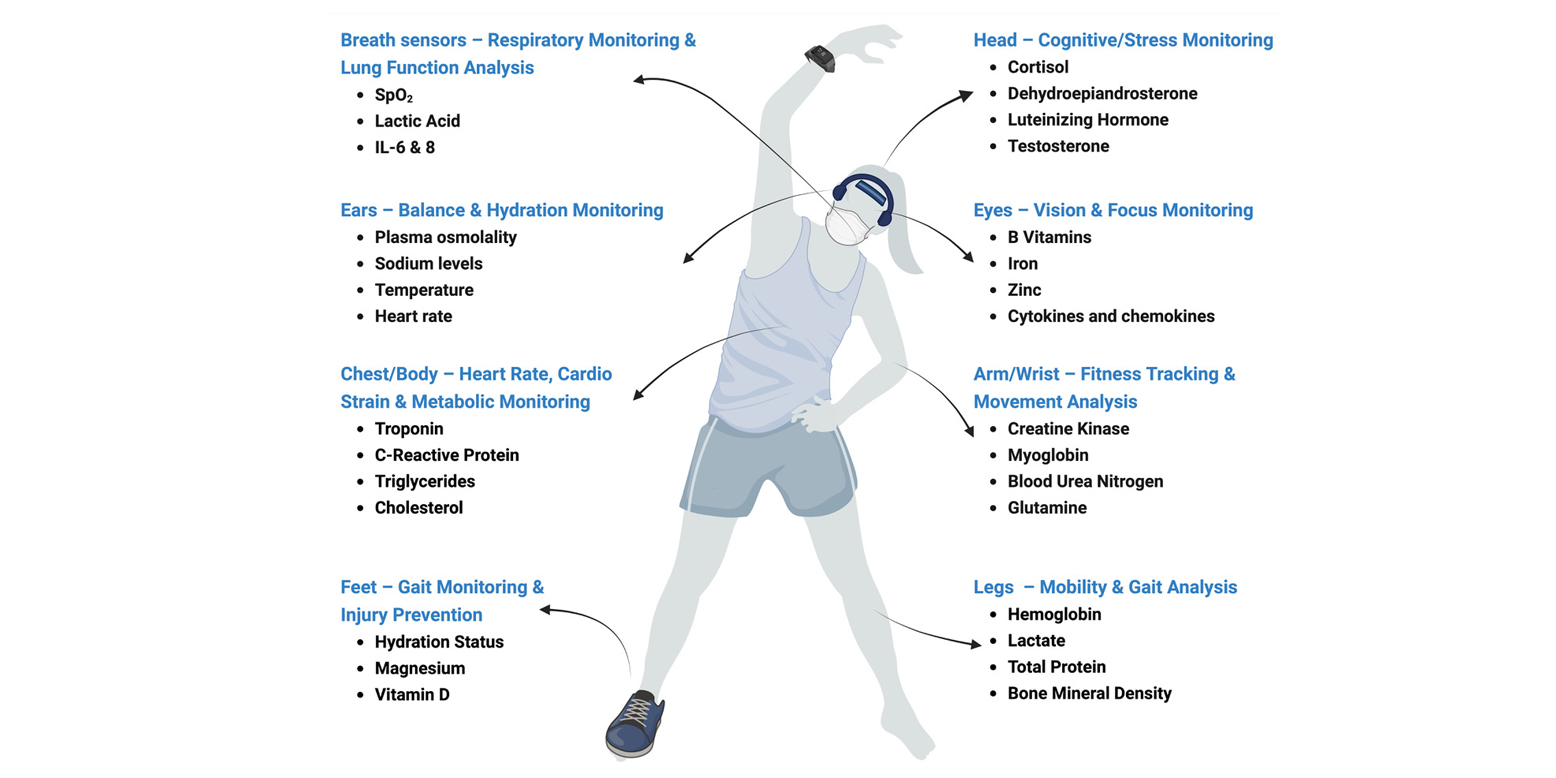
Although wearable biofluid analysis holds enormous potential, challenges remain. For example, the sensitivity and selectivity of the sensors must be improved to the point where biomarkers can be accurately detected at clinically relevant concentrations. Soon, athletes and patients could routinely use breath-based devices such as smart masks or patches worn under the nose [6] and biosensors, in addition to established wearables like smartwatches or rings, to conveniently monitor relevant physiological parameters. Such innovations not only have the potential (Figure) to increase training and recovery efficiency, but also to detect diseases at an early stage, thereby ushering in a new era of preventive and personalized healthcare.
References
- Brasier, N. et al. Applied body-fluid analysis by wearable devices. Nature 2024 636:8041 636, 57–68 (2024).
- Ates, H. C. et al. End-to-end design of wearable sensors. Nat Rev Mater 7, 887–907 (2022).
- Maier, D. et al. Toward Continuous Monitoring of Breath Biochemistry: A Paper-Based Wearable Sensor for Real-Time Hydrogen Peroxide Measurement in Simulated Breath. ACS Sens 4, 2945–2951 (2019).
- Ates, H. C. et al. Biosensor-Enabled Multiplexed On-Site Therapeutic Drug Monitoring of Antibiotics. Advanced Materials 34, 2104555 (2022).
- Brasier, N. et al. A three-level model for therapeutic drug monitoring of antimicrobials at the site of infection. Lancet Infect Dis (2023) doi:10.1016/S1473-3099(23)00215-3.
- Ates, H. C. & Dincer, C. Wearable breath analysis. Nature Reviews Bioengineering 2023 1:2 1, 80–82 (2023).
Autoren

ist seit Oktober 2024 Associate Professor für „Sensors and Wearables for Healthcare“ an der TU München. Der Forschungsschwerpunkt seiner Arbeitsgruppe liegt in der Entwicklung bioanalytischer Materialien, Sensoren und Mikrosysteme sowie deren Kombination mit Datenwissenschaft und künstlicher Intelligenz für One-Health: Gesundheit von Menschen und Tieren sowie deren gemeinsamen Umwelt. Der Fokus liegt auf Einweg Sensorensysteme für Point-of-Need-Tests und tragbare Anwendungen.

ist Postdoktorandin in der Forschungsgruppe "Sensors and Wearables for Healthcare" an der TU München. Ihr Fachgebiet umfasst die Entwicklung bioanalytischer Geräte für Vor-Ort-Diagnostik und das Therapeutische Medikamenten-Monitoring sowie das Design tragbarer Technologien für verschiedene Anwendungen im Gesundheitswesen. Während ihrer Promotion entwickelte sie eine kostengünstige Sensorplattform, um das personalisierte Management der Antibiotikatherapie zu verbessern.