PD Dr. med. Anna J. Schreiner , Richard Evans, Prof. Dr. med. Götz Welsch
Injuries are a structural risk in professional soccer—with direct implications for athletic success and significant economic implications. Recent analyses from Europe’s top leagues show that several thousand injuries occur per season, resulting in lost wages in the hundreds of millions (Howden Men’s European Football Injury Index 2023 / 24).
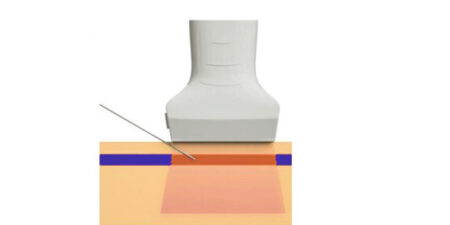
Against this backdrop, the importance of efficient rehabilitation strategies is growing. In addition to established methods, attention is increasingly turning to the question of how additional therapeutic components can be meaningfully integrated into existing approaches to further support the healing process and optimize return-to-play times. The study “Magnetic Resonance Therapy as Part of a Combination Therapy in Professional Soccer—One-Year Results, a Case Series,” published last year in the German Journal of Sports Medicine, examines the role of therapeutic magnetic resonance imaging (NMRT or tNMR, also known as KSRT or MBST®) as a complementary component within a multimodal treatment approach in professional soccer. The study was based on a case series from HSV, then a German second-division club (head team physician Prof. G. Welsch), over a period of one year. A total of 13 players with various chronic and acute musculoskeletal injuries, primarily in the lower extremities, were treated with magnetic resonance therapy in addition to their existing standard rehabilitation regimen. The underlying treatment concept was deliberately broad in scope and combined various established measures, including physical therapy interventions, sport-specific rehabilitation training, physical therapies, and complementary nutrition- and recovery-oriented strategies. MBST® was integrated as a new and additional component. This non-invasive method uses magnetic resonance therapy to stimulate cellular metabolic processes in various tissues and support regenerative processes (see also previous articles 2025/2026 in the *sportärztezeitung*).
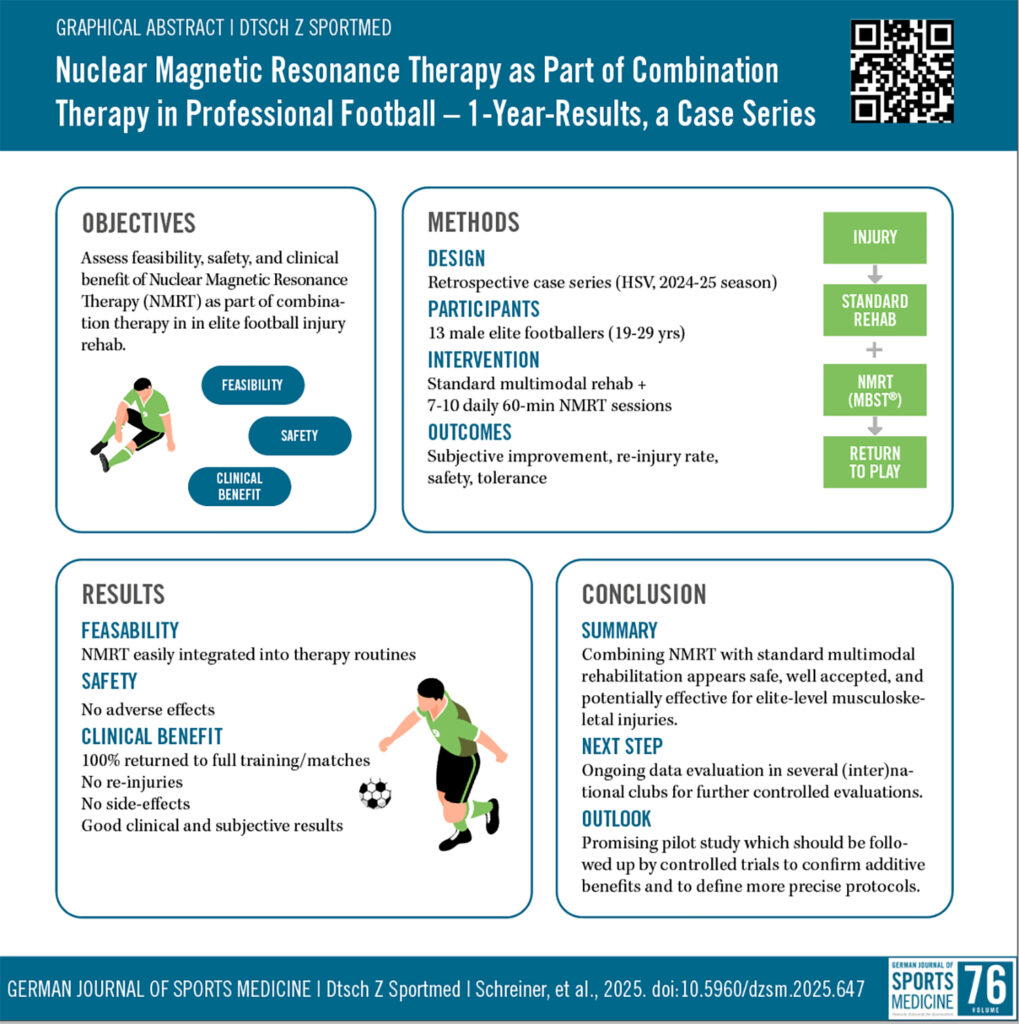
During the observation period, all participating players were successfully reintegrated into training and competition. The therapy was well integrated into the daily rehabilitation routine and was well accepted by both the players and the support team. No side effects were observed. Furthermore, no re-injuries occurred within the documented period, indicating stable healing processes. The general clinical outcomes, as well as the players’ subjective assessments, were consistently positive. When interpreting the results, it becomes clear that magnetic resonance therapy should be considered particularly within the context of complex, multimodal treatment approaches. Naturally, based on the available data, it is not possible to clearly isolate its effect. At the same time, the results show that the method can be easily integrated into existing structures and makes a supportive contribution to recovery. The cases demonstrate that, particularly in cases of chronic or treatment-resistant conditions—such as those involving tendons or bone metabolism—there may be potential added benefit, and certain gaps in treatment can be addressed with this physical therapy. However, due to the exploratory design and the limited number of cases, these are primarily practical observations. The analysis thus provides an initial structured insight into the application under real-world conditions in professional sports. It is precisely this practical relevance, however, that represents significant added value, as it addresses the feasibility and integration into the performance-oriented daily routine.
In Germany, MBST® is firmly established in therapeutic use as an official partner not only with HSV but also with Holstein Kiel and the Braunschweig Basketball Löwen (team orthopedic physician Dr. N. Fiedler). In the United Kingdom, registry data collection has been underway since last season at the soccer clubs Charlton Athletic and Wrexham AFC, as well as at the rugby club Bath. Data is thus being collected there in a real-world setting. According to Rory Murray (Head of Medical Services, Bath Rugby), the preferred applications of magnetic resonance therapy—which allows players to return to play more quickly—include the treatment of bone fractures, with particularly positive results observed in rib fractures involving cartilage, as well as tendon pathologies. At Charlton Athletic FC (Adam Coe, Head of Medical), over 40 cases of combination therapy with MRI therapy are now being monitored, demonstrating a time advantage in the form of a faster return to play for muscle injuries, tendon and ligament injuries, as well as bone pathologies (data not yet published).
Conclusion
The results of the previously published case series show that magnetic resonance therapy is being used in a practical and meaningful way as a complementary component of combination therapy in professional soccer and offers further potential. Particularly noteworthy are its good practicality, absence of side effects, high acceptance, and the observed stable and, in some cases, faster return-to-play trajectories (in the current analysis of UK registry data). Future analyses—particularly those based on larger registry data sets and spanning multiple clubs—will be crucial for more precisely assessing the significance of this method and defining expanded areas of application—e.g., in the realm of more targeted general recovery as well as prevention. Nuclear magnetic resonance therapy can therefore be regarded as a promising, useful, and relevant component of modern, integrative therapeutic strategies.
This article is based on the detailed original article: “Nuclear Magnetic Resonance Therapy as Part of Combination Therapy in Professional Soccer—One-Year Results, a Case Series” (Schreiner AJ, Mulholland K, Evans R, Welsch G. Nuclear magnetic resonance therapy as part of combination therapy in professional soccer—1-year results, a case series. Dtsch Z Sportmed. 2025; 76: 233–238. doi:10.5960/dzsm.2025.647; https://www.germanjournalsportsmedicine.com/archive/archive-2025/issue-7/nuclear-magnetic-resonance-therapy-as-part-of-combination-therapy-in-professional-football-1-year-results-a-case-series/).
Courtesy of the German Journal of Sports Medicine.
Autoren

» Fachärztin für Orthopädie und Unfallchirurgie
» Chief Medical Officer, MBST Global, MedTec Medizintechnik GmbH
» Eberhard Karls Universität Tübingen + AKAD University
(Stand 2026)

ist Facharzt für Orthopädie und Unfallchirurgie und ärztlicher Leiter des UKE Athleticum am Universitätsklinikum Hamburg Eppendorf. Er hat seit 2021 eine Professur für Orthopädische Sportmedizin am UKE. Außerdem ist er leitender Mannschaftsarzt der HSV Fußball AG. Sein klinischer Fokus liegt im Bereich der regenerativen Knorpeltherapie, der Behandlung von Sportverletzungen und Überlastungsschäden. Prof. Welsch ist wiss. Beirat der sportärztezeitung.