The revised S3 guideline on knee osteoarthritis [1], the most important German-language recommendation for action, has provoked mixed reactions and provided ample cause for discussion with regard to the recommended treatment methods [2, 3].
lowing “strong” recommendations stand out in the summary and deserve special attention in this article:
- For more sustainable healthcare, we recommend the following: […]
- Promotion of environmentally friendly lifestyles: Education and counseling on plant-based nutrition, active mobility (such as walking and cycling), and sustainable everyday practices.
- Prioritizing resource-saving treatment options (where therapies are equivalent): recommending non-surgical measures such as exercise therapy, behavioral modification, and weight
management before considering invasive procedures. [1]
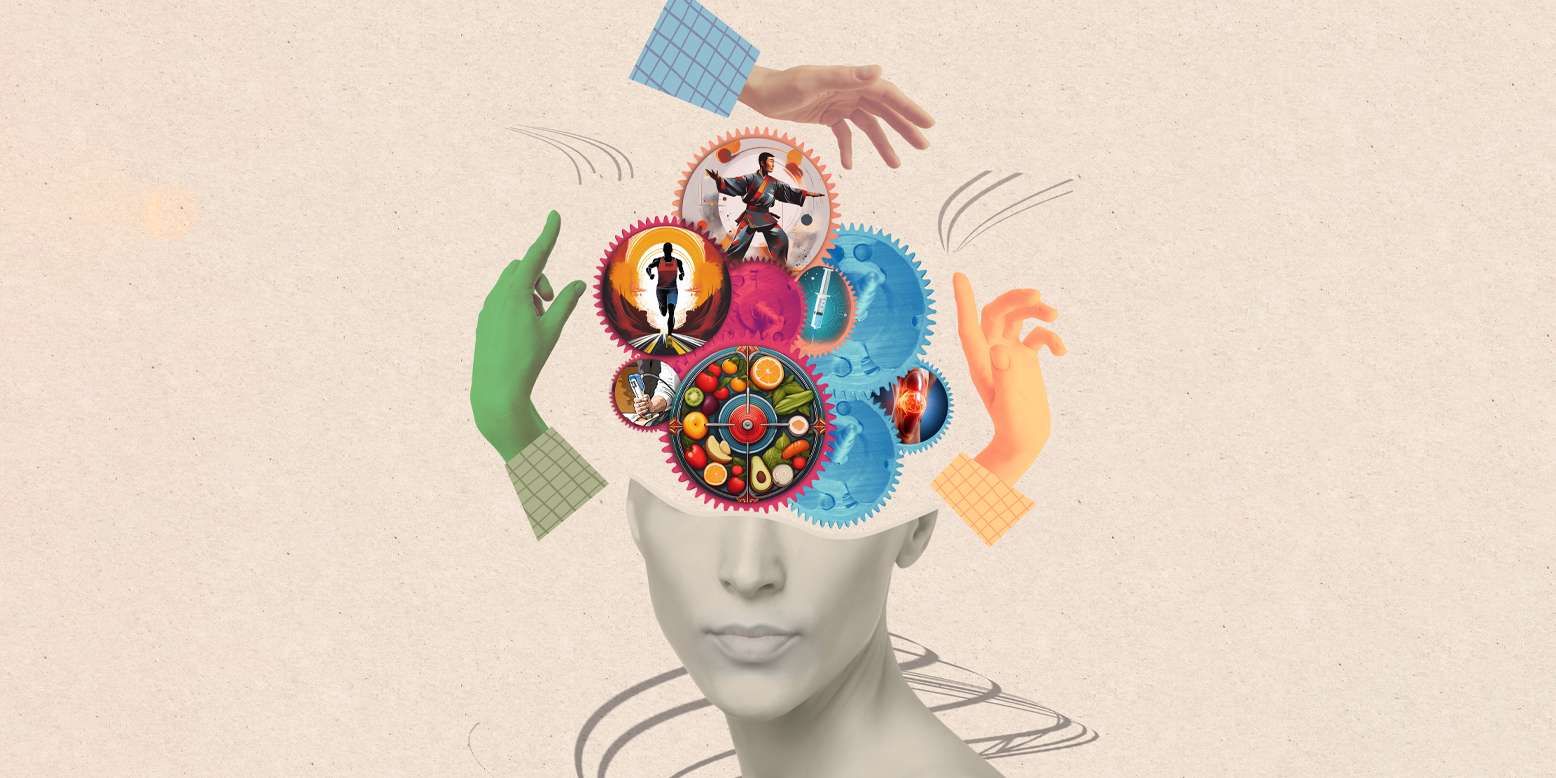
In addition to promoting an active lifestyle with a focus on mobility (e.g., walking and cycling in everyday life, taking the stairs instead of the elevator), exercise therapy is an evidence-based treatment method of undisputed fundamental importance, which should now finally be taken into account in healthcare practice. But what exactly should this exercise therapy look like? To give this originally sports medicine-related and at the same time highly translational field more contour, it is worth taking a look at the recently published systematic review and meta-analysis by Yan et al. [4]. The team of authors compared six training methods in terms of their effect on pain reduction, function, gait pattern, and quality of life. Among these, aerobic exercise (walking, running, cycling, swimming) performed best as a first-line treatment. In addition, strengthening, flexibility, and coordination exercises, as well as so-called mind-body exercises [5], were also examined and rated positively. The latter form of exercise, as part of mind-body medicine [6], which has already been considered in earlier studies on knee osteoarthritis [7, 8], can make a valuable contribution to the treatment of osteoarthritis symptoms, shifting the focus from the painful knee joint to the whole person. This is entirely in line with the holistic concept of whole-person health [9], which is also becoming increasingly important in the context of prehabilitation [10]. The affected person becomes an active part of the treatment team, which focuses on self-efficacy and teamwork and promotes adherence. Interventions from mind-body medicine can also be used when “traditional” therapeutic approaches such as aerobic exercise cannot be carried out due to physical condition or other obstacles.
Targeted Nutrition
In addition to exercise as therapy and behavioral adjustment in the sense of strengthening self-efficacy, the S3 guideline also explicitly mentions plant-based nutrition [1] as an important component of osteoarthritis treatment, thus emphasizing the concept of targeted nutrition [11]. Key aspects include sufficient protein intake with a targeted amino acid composition, the intake of collagen [12, 13] and fiber [14, 15], as well as supplementary systemic enzyme therapy [12, 13, 16, 17], multi-substance mixtures [18], and phytopharmaceuticals. Curcuma [19 – 24] in particular is playing an increasingly scientifically proven role in pain reduction and functional improvement in degenerative diseases such as osteoarthritis.
This knowledge deserves to be taken into account in daily care and tested in practice – not as a replacement, but as a supplement to established forms of therapy. We should seize the opportunity to further examine, apply, and critically observe such approaches in order to expand the field of conservative and regenerative medicine with valuable biological options.
Mind-body medicine and shared medical appointments
Mind-body medicine is considered to be of additional importance in reducing inflammatory biomarkers [25] and in the individual management of psychosocial stress [26]. Self-management and patient education are individual and closely linked to lifestyle medicine. They require targeted training and continuing education strategies for both patients and therapists. These approaches must now be consistently integrated into real-world care – analogous to the already established sports and exercise therapy. Oncology provides an interesting, differentiated, and precise approach with the concept of exercise oncology [27], while the currently evolving field of prehabilitation [10] can serve as a framework. The “open window” that is emerging in relation to prehabilitation offers the opportunity to anchor these innovative approaches in the long term. Let’s take advantage of it and make the necessary changes in medical care a reality. As already emphasized in the article by Lison & Lison, there is virtually no alternative to all these developments [28].
The salutogenic potential is far from exhausted – rather, it paves the way for a new era of medical care, in line with the mind-body medicine concept coined by Professor Herbert Benson and Professor Jon Kabatt-Zinn [29] [6, 30].
The cost-efficient concept of shared medical appointments (SMA) [31, 32] also appears to be particularly forward-looking in this context. This model of joint medical consultations [29] enables the efficient, interdisciplinary, and team-oriented implementation of mind-body approaches as well as lifestyle medicine – with patients as active members of their therapeutic process.
In the recent article “Bashing Doctors Instead of Science,” published in Orthopedics and Trauma Surgery 2025 15(5), the authors, Dr. Burkhard Lembeck (President of the BVOU) and Janosch Kuno (BVOU Press Officer), emphasize “that patients rightly expect their healthcare providers to exhaust all conservative therapies before resorting to surgery, even if the evidence for them is weak. This applies in particular to chronic conditions such as osteoarthritis or tendon irritation, when standard therapies do not help.” Especially from this perspective, the article “Integrative Osteoarthritis Therapy” seems more relevant and important to us than ever. We look forward to further developments in this field.
—————
“It is evident that over the past 30 years, medicine has recognized that the mysterious dynamic balance we call health encompasses both body and mind and can be strengthened through certain qualities of attention – qualities that can have a nourishing, regenerative, and healing effect. We all possess this ability – let’s put it to use.” Jon Kabat-Zinn from the book “Coming to Our Senses” (2005)
—————
Study Tip Tai Chi helps with knee pain and improves knee function in people with knee osteoarthritis. Zhu SJ, et al. Online Unsupervised Tai Chi Intervention for Knee Pain and Function in People With Knee Osteoarthritis: The RETREAT Randomized Clinical Trial. JAMA Intern Med. Published online October 27, 2025. doi:10.1001/jamainternmed.2025.5723
—————
Literature
[1] Deutsche Gesellschaft für Orthopädie und Unfallchirurgie e.V.: Prävention und Therapie der Gonarthrose Version 5.0, 15.07.2024: https://register.awmf.org/de/leitlinien/detail/187-050
[2] Stellungnahme des BVOU zur Kritik an IGeL-Leistungen. BVOU 2025 https://sportaerztezeitung.com/rubriken/therapie/20313/stellungnahme-des-bvou-zur-kritik-an-igel-leistungen/
[3] Hyaluron-Spritzen bei Kniearthrose. Nutzen und Risiko. NDR Visite 02.09.2025. https://sportaerztezeitung.com/rubriken/therapie/20498/hyaluron-spritzen-bei-kniearthrose/
[4] Yan L. et al. Comparative efficacy and safety of exercise modalities in knee osteoarthritis: systematic review and network meta-analysis. BMJ. 2025 Oct 15;391:e085242. doi: 10.1136/bmj-2025-085242. PMID: 41093618; PMCID: PMC12522397.
[5] Mind-body Exercises. sportärztezeitung online. https://sportaerztezeitung.com/rubriken/training/20038/mind-body-exercises/
[6] Erbeldinger, R. (2025). Mind-Body Medicine Completes Sports Medicine: Development of a Prophylaxis Model Through Sports Medicine. THE MIND Bulletin on Mind-Body Medicine Research, 7, 23-30. https://doi.org/10.61936/themind/202504306
[7] Kessler CS. et al. Effectiveness of an Ayurveda treatment approach in knee osteoarthritis – a randomized controlled trial. Osteoarthritis Cartilage. 2018 May;26(5):620-630. doi: 10.1016/j.joca.2018.01.022. Epub 2018 Feb 7. PMID: 29426006.
[8] Lim WB, Al-Dadah O. Conservative treatment of knee osteoarthritis: A review of the literature. World J Orthop. 2022 Mar 18;13(3):212-229. doi: 10.5312/wjo.v13.i3.212. PMID: 35317254; PMCID: PMC8935331.
[9] Whole Person Health: What It Is and Why It’s Important. National Center for Complementary and Integrative Health. https://www.nccih.nih.gov/health/whole-person-health-what-it-is-and-why-its-important
[10] Erbeldinger R, Roßberg M, Hub S, Henze A. Prähabilitation (Prähab). sportärztezeitung online. https://sportaerztezeitung.com/rubriken/therapie/20728/praehabilitation-praehab/
[11] Erbeldinger R. Targeted Nutrition – Nutritional Education. sportärztezeitung online. https://sportaerztezeitung.com/rubriken/ernaehrung/20110/targeted-nutrition/
[12] Wild-Bode C. Kollagen und Enzyme. sportärztezeitung 02/25. https://sportaerztezeitung.com/rubriken/therapie/19713/kollagen-und-enzyme/
[13] Niemeyer P, Herbort M, Post F. Nahrungsergänzung – Was kann ich bei Knorpelschaden oder Arthrose in Bezug auf Ernährung und Nahrungsergänzung tun? Podcast Listen2Science. 29.11.2024. https://sportaerztezeitung.com/rubriken/ernaehrung/18261/ernaehrungstherapie-und-nahrungsergaenzung/
[14] Pang A. et al. Short-chain fatty acids from gut microbiota restore Th17/Treg balance in rheumatoid arthritis: Mechanisms and therapeutic potential. Journal of Translational Autoimmunity, Volume 11, December 2025, 100316. https://doi.org/10.1016/j.jtauto.2025.100316
[15] Häger J. et al. The Role of Dietary Fiber in Rheumatoid Arthritis Patients: A Feasibility Study. Nutrients 2019, 11, 2392. https://doi.org/10.3390/nu11102392
[16] Henrotin Y. et al. Oral enzyme combination therapy reduces systemic inflammation, urinary CTXII and pain in knee osteoarthritis: a proof-of-mechanism, randomised, crossover, double-blind, placebo-controlled trial. RMD Open. 2025 Aug 12;11(3):e005433. doi: 10.1136/rmdopen-2025-005433. PMID: 40803821; PMCID: PMC12352264.
[17] Klein G. et al. Efficacy and tolerance of an oral enzyme combination in painful osteoarthritis of the hip. A double-blind, randomised study comparing oral enzymes with non-steroidal anti-inflammatory drugs. Clin Exp Rheumatol. 2006 Jan-Feb;24(1):25-30. PMID: 16539815.
[18] Post F. Hafer und Herzgesundheit. sportärztezeitung 02/25. https://sportaerztezeitung.com/rubriken/ernaehrung/19698/hafer-und-herzgesundheit/
[19] Zeng L. et al. Efficacy and Safety of Curcumin and Curcuma longa Extract in the Treatment of Arthritis: A Systematic Review and Meta-Analysis of Randomized Controlled Trial. Front Immunol. 2022 Jul 22;13:891822. doi: 10.3389/fimmu.2022.891822. PMID: 35935936; PMCID: PMC9353077.
[20] Montagnino J. et al. Optimizing orthobiologic therapies with exercise, diet, and supplements. PM R. 2025 Apr;17(4):452-462. doi: 10.1002/pmrj.13320. Epub 2025 Jan 24. PMID: 39853939.
[21] Brockmüller A, Shakibaei M. Epigenetische Wirksamkeit von Curcumin. sportärztezeitung 04/23. https://sportaerztezeitung.com/rubriken/ernaehrung/15026/epigenetische-wirksamkeit-von-curcumin/
[22] Kuptniratsaikul V. et al. Efficacy and safety of Curcuma domestica extracts compared with ibuprofen in patients with knee osteoarthritis: a multicenter study. Clin Interv Aging. 2014 Mar 20;9:451-8. doi: 10.2147/CIA.S58535. PMID: 24672232; PMCID: PMC3964021.
[23] Peng Y. et al. Anti-Inflammatory Effects of Curcumin in the Inflammatory Diseases: Status, Limitations and Countermeasures. Drug Des Devel Ther. 2021 Nov 2;15:4503-4525. doi: 10.2147/DDDT.S327378. PMID: 34754179; PMCID: PMC8572027.
[24] Bittel M. et al. Kurkuma- und Curcuminoid-Behandlung bei Gonarthrose. Zeitschrift für Phytotherapie 2022; 43(06): 243-249 doi: 10.1055/a-1924-9460
[25] Mehta D. et al. Turning Down the Heat: Mind-Body Strategies Against Inflammaging. Journal of Integrative and Complementary MedicineVol. 31, No. 10. Published Online: 14 October 2025. https://doi.org/10.1177/2768360525138371
[26] Denninger JW. et al. Psychological assessments, allostatic load and gene expression analyses in a randomized controlled trial comparing meditation, yoga, and stress education. Front Psychol. 2025 Sep 12;16:1653242. doi: 10.3389/fpsyg.2025.1653242. PMID: 41020112; PMCID: PMC12463968.
[27] Voland, A. et al. Update onkologische Sport- und Bewegungstherapie. Fokus Onkol 28, 40–47 (2025). https://doi.org/10.1007/s15015-025-4316-9
[28] Lison A, Lison D. Teilhaben. Sportmedizin und Rehabilitation. sportärztezeitung 04/25
[29] Michalsen A. Ordnungstherapie, Stressreduktion und Mind-Body-Medizin – Begleittherapien bei chronischen Nierenerkrankungen. Dialyse aktuell 2015; 19(5): 264-269. DOI: 10.1055/s-0035-1556951
[30] Dossett ML, Fricchione GL, Benson H. A New Era for Mind-Body Medicine. N Engl J Med. 2020 Apr 9;382(15):1390-1391. doi: 10.1056/NEJMp1917461. PMID: 32268025; PMCID: PMC7486127.
[31] Erbeldinger R. Group Medical Visits. sportärztezeitung online. https://sportaerztezeitung.com/rubriken/therapie/20203/group-medical-visits/
[32] Branch A. How to use shared medical appointments in under-resourced communities. September 4, 2025. https://lifestylemedicine.org/how-to-use-shared-medical-appointments-in-under-resourced-communities/
Autoren

ist Diplom-Sportwissenschaftler mit Professional Master’s Degree in Sports Medicine sowie postgradualen Weiterbildungen in Mind-Body-Medizin (Harvard Medical School), Psychoneuroimmunologie und Lifestyle Medicine (American College of Lifestyle Medicine); Verleger der sportärztezeitung.
is a certified sports scientist with a professional master's degree in sports medicine and postgraduate training in mind-body medicine (Harvard Medical School), psychoneuroimmunology, and lifestyle medicine (American College of Lifestyle Medicine); publisher of the sportärztezeitung.

» Facharzt für Orthopädie und Unfallchirurgie mit Zusatzbezeichnungen Sportmedizin und Manuelle Medizin
» Oberarzt der Sportorthopädie der Sport- und Rehabilitationsmedizin des Universitätsklinikums Ulm
» Vorsitzender des AGA-Komitees „Prävention, konservative Therapie und Rehabilitation“ sowie Vorsitzender der DVSE-Kommission „Konservative Therapie“ & stv. Vorsitzender der Handballärzte Deutschland
(Stand 2026)

ist Facharzt für Orthopädie und Unfallchirurgie und ärztlicher Leiter des UKE Athleticum am Universitätsklinikum Hamburg Eppendorf. Er hat seit 2021 eine Professur für Orthopädische Sportmedizin am UKE. Außerdem ist er leitender Mannschaftsarzt der HSV Fußball AG. Sein klinischer Fokus liegt im Bereich der regenerativen Knorpeltherapie, der Behandlung von Sportverletzungen und Überlastungsschäden. Prof. Welsch ist wiss. Beirat der sportärztezeitung.