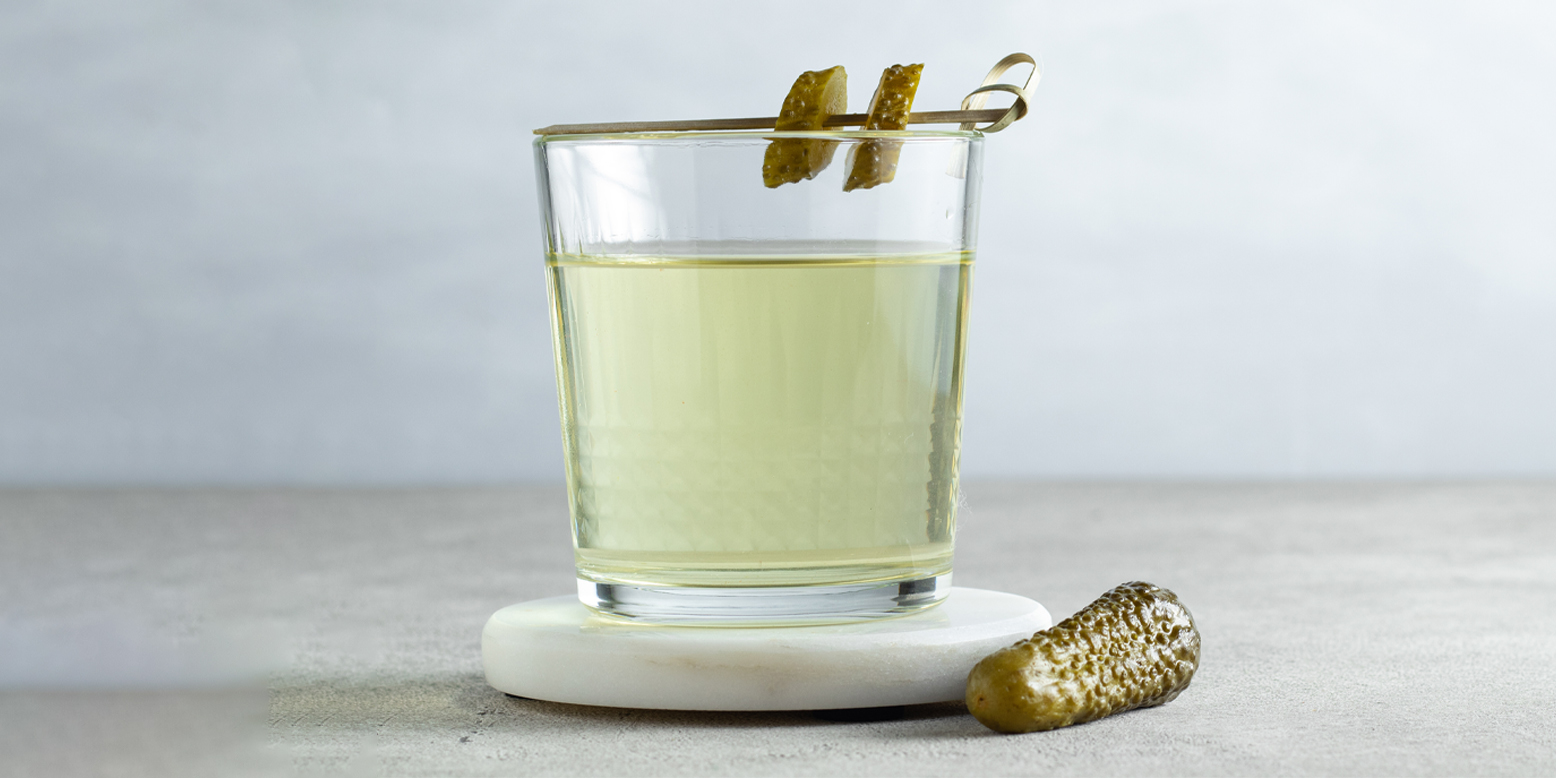
At the 2026 Australian Open, Carlos Alcaraz apparently drank cucumber water during his semifinal match against Alexander Zverev to relieve his muscle cramps. The limping tennis star won the match. For the same reason, ice hockey superstar Leon Draisaitl consumed mustard at the 2026 Olympics – because of the acetic acid it contains. Acetic acid is said to have a neural effect on cramps. In addition to acetic acid, pickle juice contains a relatively high amount of sodium (approx. 200 mg in 30 ml), but low amounts of magnesium and potassium.
Muscle cramps are a temporary but intense and painful involuntary contraction of the skeletal muscles that can occur in many different situations. There is evidence that some cases are related to water and salt imbalances, while others appear to be triggered by persistent abnormal spinal reflex activity as a result of fatigue in the affected muscles. This has led to alternative explanations, such as the theory of neuromuscular fatigue – i.e., impaired signal transmission between the brain and muscles after prolonged exertion.
Studies show that dehydration has no effect on the stimulation frequency required to trigger a cramp and confirm the involvement of spinal mechanisms. However, it is questionable to what extent these models are relevant to spontaneous cramps that occur during (exercise-associated muscle cramps (EAMC)) or after exercise. It has therefore been hypothesized that cramps are caused by persistent abnormal spinal reflex activity, which appears to be secondary to muscle fatigue. In particular, EAMC has been attributed to a disturbance in the sustained activity of alpha motor neurons, which is based on a dysregulation of alpha motor neurons at the spinal level. Muscle fatigue was considered to be a triggering factor, as it increases the afferent activity of the muscle spindles (type Ia and II) and simultaneously inhibits the afferent activity of the type Ib Golgi tendon organs. Indirect evidence supporting this theory comes from the observation that passive stretching of the affected muscle during a cramp can alleviate the symptoms – presumably through autogenic inhibition via the tendon organ reflex. Nevertheless, this does not explain why cramps are not an inevitable consequence of every strenuous activity, why they occur more frequently in environments with high heat stress, or why some people are affected while others are spared.
In the human model of electrically induced cramps, it has been reported that pickle juice effectively shortens the duration of cramps. Miller et al. found that the duration of cramps was reduced by an average of about 37 % when 1 mL of pickle juice was consumed two seconds after the onset of cramps, compared to an experiment in which water was drunk. This did not affect the intensity of the cramp. Ingesting small amounts of pickle juice had no measurable effect on plasma concentrations of sodium, potassium, magnesium, or calcium, nor on plasma osmolality or plasma volume. Since the pickle juice did not cause any changes in circulating electrolytes, the authors suggested that the shortened cramp is mediated by the activation of receptors in the oropharynx, leading to a reduced discharge rate of the alpha motor neurons that innervate the affected muscle. However, it is important to emphasize that this was not a study of EAMC, but rather cramps triggered by electrical stimulation during a maximal voluntary contraction of a small foot muscle. In a randomized study (2023) involving 82 patients with liver cirrhosis and a history of more than four muscle cramps in the previous month, 1 tablespoon of pickle juice taken at the onset of a cramp improved cramp intensity without causing any adverse side effects.
Literature
- Miller, K.C. Electrolyte and Plasma Responses After Pickle Juice, Mustard, and Deionized Water Ingestion in Dehydrated Humans. J Athl Train. 2014 May-Jun;49(3):360–367. doi: 10.4085/1062-6050-49.2.23
- Elliot B Tapper et al. Pickle Juice Intervention for Cirrhotic Cramps Reduction: The PICCLES Randomized Controlled Trial. Am J Gastroenterol. 2022 Apr 13;117(6):895–901. doi:10.14309/ajg.0000000000001781
- Ronald J Maughan, Susan M Shirreffs. Muscle Cramping During Exercise: Causes, Solutions, and Questions Remaining. Sports Med. 2019 Nov 6;49(Suppl 2):115–124. doi: 10.1007/s40279-019-01162-1.
- Miller KC, Mack GW, Knight KL, et al. Reflex inhibition of electrically induced muscle cramps in hypohydrated humans. Med Sci Sports Exerc. 2010;42(5):953–961. doi: 10.1249/MSS.0b013e3181c0647e.
- Miller KC, Mack G, Knight KL. Electrolyte and plasma changes after ingestion of pickle juice, water, and a common carbohydrate-electrolyte solution. J Athl Train. 2009;44(5):454–461. doi: 10.4085/1062-6050-44.5.454.
- Kevin C Miller. Electrolyte and plasma responses after pickle juice, mustard, and deionized water ingestion in dehydrated humans. J Athl Train. 2014 May-Jun;49(3):360-7. doi: 10.4085/1062-6050-49.2.23. Epub 2014 Feb 12.
- Jarett Peikert, Kevin C Miller, Jay Albrecht, Jared Tucker, James Deal. Pre-exercise ingestion of pickle juice, hypertonic saline, or water and aerobic performance and thermoregulation. Controlled Clinical Trial. J Athl Train. 2014 Mar-Apr;49(2):204-9.doi: 10.4085/1062-6050-49.2.11. Epub 2014 Feb 25.
- McKenney, M.A.; Miller, K.C.; Deal, J.E.; Garden-Robinson, J.A.; Rhee, Y.S. Plasma and Electrolyte Changes in Exercising Humans After Ingestion of Multiple Boluses of Pickle Juice. J. Athl. Train. 2015, 50, 141–146.
- Stephanie E Hooper Marosek, Vijay Antharam, Katayoon Dowlatshahi. Quantitative Analysis of the Acetic Acid Content in Substances Used by Athletes for the Possible Prevention and Alleviation of Exercise-Associated Muscle Cramps. J Strength Cond Res. 2020 Jun;34(6):1539-1546. doi: 10.1519/JSC.0000000000003595.
Autoren

» Facharzt für Allgemeinmedizin und Arbeitsmedizin mit Zusatzbezeichnungen u. a. Chirotherapie und Sportmedizin
» Leitender Arzt BG Prevent GmbH, Darmstadt
» 2011–2020 Teamarzt SV Darmstadt 98 (2015–2022 im NLZ), 2022–2023 Ergänzung med. Team des 1. FC Kaiserslautern (Ernährungsmedizin, Regeneration- und Leistungsmedizin & Mannschaftsarzt), 2002–2014 med. Leiter Ironman Germany
(Stand 2026)